Humans love choice, it gives them the illusion of freedom.
3
Choice is a situation that’s already conditioned by your nature and the impositions forced upon you by culture.
4
Choice is limited. Our very nature doesn’t allow us to choose to be a bird….or Napoleon.
5
What gave the existentialists their nausea? It wasn’t their freedom, rather, it was their lack of freedom: falling into a nihilist hole does that to you.
6
There are so many unknown drives that determine choice, that makes a person. Science has barely scratched the surface of these drives. “Everything that humans have viewed until now as the ‘conditions of their existence’ and all the reason, passion, and superstition that such a view involves – has this been researched exhaustively? To observe how differently the human drives have grown and still could grow depending on the moral climate – that alone involves too much work for even the most industrious; it would require whole generations, and generations of scholars who would collaborate systematically, to exhaust the points of view and the material.”
7
Every choice you make determines your fate.
8
Is this a paradox? The realisation of your fate is, itself, freedom.
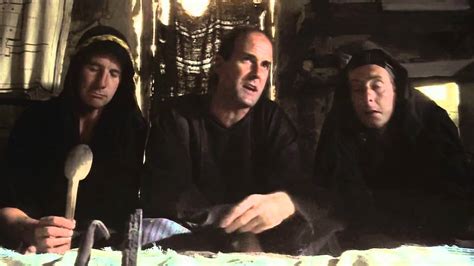
We’ve all seen the scene in Monty Python’s Life of Brian, when John Cleese asks, ‘What have the Romans ever done for us?’ Well, they were the first to, after conquest, subsume the defeated culture into their own culture and to claim the achievements of said culture as their own. So, the question should be: What have the Greeks ever done for us? A hell of a lot!
Incidentally, the Greeks were the opposite of the Romans when it came to conquest. The Greeks had no need of other cultures, their own culture was too strong to be influenced by another culture. Alexander the Great, the Macedonian Greek colonist, proves this point! When the Greeks settled somewhere, they built shrines to their gods. In the same way, American troops in the First World War arrived in Europe with all of their home comforts, baseball, cigarettes, chewing gum and, of course, jazz music. That was last century, the American century, and, like all dynasties, it too will end.
This is the ‘strength’ (the power to resist other influences) Nietzsche always lauds in his many paeans to the Greeks, something he also appreciated in the French Enlightenment – Voltaire not Rousseau! The French, according to Nietzsche, were perfectly content in their own plumage, they weren’t even interested in learning other languages. Sounds priggish, and, of course, done without style, it is chauvinistic. It’s a difficult balancing act: a dance, as Nietzsche would say.
…our standing has an enviable reputation for disinterest and impartiality in our reporting…
Whoever believes in that anymore, that one can be‘disinterested’ when engaging in something, anything? Its almost as though we are talking about a cognisant corpse whose ‘blood runs cold’ while making judgements. The inner core temperature of humans is 98.F, not exactly cold. Yes its a metaphor but it also hides the unconscious thought that, being civilised we are all rational calculating machines in every situation. This is something we have learned over millennia of cultivation, self-cultivation. The true animal inside us now only exists in an archaic hall of mirrors cropping up in our dreams, or sometimes ‘real’ life. In our early evolutionary existence we had very different emotions than we have today, though they’re part of us, a phylogenetic inheritance that we can only deny and censor.
Isn’t it more like this:
Does nature not remain silent about almost everything, even about our bodies, banishing and enclosing us within a proud, illusory consciousness, far away from the twists and turns of the bowels, the rapid flow of the blood stream and the complicated tremblings of the nerve-fibres? Nature has thrown away the key, and woe betide fateful curiosity should it ever succeed in peering through a crack in the chamber of consciousness, out and down into the depths, and thus gain an intimation of the fact that humanity, in the indifference of its ignorance, rests on the pitiless, the greedy, the insatiable, the murderous.
Friedrich Nietzsche, ‘On Truth and Lying in a Non-Moral Sense’
These antique, archaic remnants are no less the foundation of all humanity, but are the foundations of all civilisations. The greedy acquisitions, the double-crossing, the murders and appropriations of land, resources, people, the air we breathe. Yes, even the air that we breathe, it is the one resource that we can’t quantify no matter our pride; or because of our pride, we can’t give any value to it because we just don’t see it as stuff. This self-interest is also at the heart of our morality, we are social creatures of reputation with nay a disinterested bone in our body.
The sword that benefits from the pen is mightier. And vice versa. For the most part, history is a result of the pen benefiting from the sword. So that’s another myth (sacred cow) demolished.
A proper understanding (feeling) of chronology, it’s literal position in comprehension, is necessary in understanding all history, including your own. Especially your own. For modern day idols, see sacred cows. Every culture has them, especially post-god-is-dead cultures. In the west our pampered post-culture has the sacred cow of ‘guilt-free democracy’. Basically freedom-without-responsibility. We vote for them but we’re not responsible for them.
The search for Being, history foretells this, has lead to colonialism, slavery and the own goal of climate change. Talk about shooting yourself in the foot. Unfortunately we are stuck with the complete misreading of the runes of history. The so-called ‘last man’, bloated with the facts of history (all practical understanding) though without interpretation, walks around as though blind. Thus, climate change is a clear example of this blindness through misunderstanding: a correct reading of history would enable the understanding of how our use of resources changes the chemistry of our environment. Denile of this is still very active. Follow the money, follow the psychology of ‘progress and technology’, even science.
It’s very Heraclitian: science and technology, both take and give, but not necessarily in equal volume. Imbalance is our natural condition, just scratch the surface.
What next? Has this question even been conceived yet?
What do I want? ……What do I want, really, really, want? ………. This must be one of the hardest questions one can ask themselves. If the question was less vague and more qualified where the various answers stood out before you and you were left with a reasonable choice then the question wouldn’t be so difficult. But we can all answer, to a certain degree, the questions with multiple choice answers.
When I was drunk, and I mean drunk all of the time, the answer to this question was quite easy: I wanted to be sober and with better sleep so as I could make the most of each day. I followed that with another answer: to be able to read and write more. I am now sober and have plenty of the day and am reading more and writing (not very well, I admit) more. Yet the question still nags at me. If I was writing better, even getting some recognition from it, would that answer the question? Possibly yes, but like the promised land, one doesn’t know until one gets there.
So, I’m stuck. What do I want?
Do I want to be happy? To be rich? To have lots of friends? To be free of pain, threats, anguish and anxiety? Do I want to be successful – whatever success is defined by?
Everyone wants the above. So that can’t be the answer to the question.
Maybe I should look at other people and ask the question of them, in my mind. I could use the people I met while I was in detox. Some people had families: I could imagine their answer to the question would be to get better and to be back with their family. What does this answer entail? It says that being in a loving family is what that person wants. So, as long as it doesn’t affect their being in a loving family, they could have any position in society and it wouldn’t be a priority. Eg: “Okay, I’m unemployed but I still have what I want because I have a loving partner and children.” Another person, who also has a loving wife, I met, was there for his bi-polar moods which he got because he took a substance to help him stop smoking. Clearly he wanted to stop smoking to such a degree that he risked his own life towards that aim. Now, he still has a loving wife but now he has an additional problem to add to his smoking. Other people had problems, not addiction problems, that wouldn’t go away (depression, bi-polar, traumatic events in their life) that they wanted to at least learn how to live with so they can have a certain “wellness” in their life. But, with this example we have someone who, like me before, wanted a particular issue dealt with which would still leave the question, What do I want? untouched.
So, what do I want?
At the moment I come to the conclusion that I must just keep on doing what I’m doing, like having regular hours, being active, reading and writing more, staying in touch with the few people I do have. Maybe it will come to me, maybe I have already answered the question.
Okay so this won the Booker prize and has a multitude of positive reviews, but I couldn’t finish it. Briefly, its the story of a spirit-child who is born for a short while in the real world but who’s command is to return to the spirit world when still a child. The child disobeys and wishes to stay in the real world (I’m reminded of Wim Wenders’ Wings of Desire and Far Away, So Close, as a conceit only). The spirit world try to take him back to their world. But do I care? No because what plot there is it is slow in coming to and is drowned out by the extensive ‘magic-realism’, or the fevered hallucinations that have way too much prominence in the book. I get that the magic-realism is to be taken allegorically and symbolically of the beginnings of an African state after decolonization and that there may be something universally profound in the story, but I feel that it is two hundred pages too long and would have benefited by being more concise with more emphasis put on the plot. I’m sure many of you will disagree with me. Please use the comment section with your thoughts.
There is a lot of talk about austerity, about having less austerity, more or even none. For those on the right this is a legitimate activity, but for those on the left who continually use the rhetoric of austerity, that they want less or even no austerity, they are making a serious category error, particularly because they do not question why we have austerity in the first place: capitalism. There are many on the left who only talk of less austerity, it must be assumed that they are not questioning the supreme place that neo-liberal capitalist economy holds in contemporary Western culture. For those on the left who want to see the end of austerity and do not question austerity’s origin in capitalism, it appears that they are misunderstanding austerity.
Capitalism Is The Ideology Not Austerity
A fundamental misunderstanding of austerity is in thinking that it is an ideology. It isn’t the ideology, it is capitalism, and in these times, neo-liberal capitalism that is the ideology. Those on the right and those who are economic libertarians, have capitalist economy as their own particular ideology and (specifically as it rarely affects them) they accept austerity as a positive within this economy that requires its downturns. Capitalist economy accords with their world view, a view that sees no value in the human being in anything other than monetary and as a piece of equipment for use in the workplace.
That certain sections of the left, if not most, collude in this ideology is unfortunate. It is also self-defeating. One aspect of austerity that leads to this misunderstanding is the way austerity is used by those on the right, as evidenced by the 2010-15 government and the current Conservative administration. Austerity is used as a tool by these administrations in order to effect a particular ideology, that of decimating the State’s provisions for its citizens. So, currently, every council in England are making massive cuts to its operational budgets leaving vital services for the disabled, sport and leisure, environment, education and many other unseen provisions, being cut or got rid of completely. Or being privatised which is death by a thousand cuts (pun intended). Nationally we are seeing this happen by the proposed £12billion cuts to welfare and the perilous situation the NHS finds itself in. Witnessing all of this the confused left have concluded that austerity is ideological instead of a tool of ideology. This misunderstanding is further compounded by its rhetorical use by all parties of the left, because in arguing for less austerity or even no austerity they fail to comprehend that they should be arguing for an end to neo-liberal capitalist economy if they want to end austerity. The Chancellor, George Osborne, knows this and is making hay with this knowledge. How? Because no one is seriously disagreeing with him on the need for austerity, only on the minutia, offering sticking plasters thinking this will revive a corpse.
Neo-Liberal Capitalism, Debt And Globalisation
At the time of the latest financial collapse in 2008 the combined debt of advanced capitalist economies went into trillions of dollars. As money is the foundation of all economies, and as debt is the machination used by fiscal economy to fund said economy, it is no surprise that the downturns in capital occur frequently. The severity of the 2008 crash has been exacerbated by three factors: 1. The criminality of the banking sector, particularly in the UK but also generally; 2. The neo-liberal version of capitalism that is in vogue today which requires lax control of the financial markets, a dismantling of government laws and services along with a bigger emphasis on debt as a tool to finance the activities of business and governments. The third, and most pernicious, of the factors that is integral to this latest crash of capital markets is globalisation which is a particularly neo-liberal phenomenon. But the phenomenon of globalisation, as William Greider presciently foretold in One World, Ready Or Not, published in 1997, would swing back at the main players (or those they govern) of globalisation, those who deal in the ‘abstract’ of trading in finance and resources. The logic of globalisation will inevitably lead to reduced living standards of all but the top-tier of society by discarding “old political commitments to social equity and reduce benefit systems for pensions, health care, income support and various forms of ameliorative aid.” (Page, 285) We are clearly in the midst of this scenario now.
Those in the higher echelons of society should feel no comfort by their seeming detachment from the problems the rest of society now faces. By accepting, if not participating in the laissez-faire nature of trading in capital, they have unwittingly set in train the demise of the traditional tools of trade: industrialisation and manufacturing. So there is a trade deficit between exports (the real value of a country’s GDP) and imports (which is usually paid for though debt). Added to this are the mass unemployment caused by jobs moving to cheaper locations and the rise of technology that takes jobs away from humans. As if this was not bad enough the next catastrophe, due to the increasing toll on the planet by burning fossil fuels and by an unsustainable acquisition of resources, is climate change leading to drought, a collapse of vital resources, mass population movements, and, ultimately, unending wars. This ‘perfect storm’ of events will ensure that the elite will become engulfed just like the rest of us, though maybe not as quickly.
The Left Failure To Tackle Capitalism As The Real Cause
The left understands all of this, they have many organisations that deal with each issue above independently. The problem is that taking any issue in society, political or cultural, individually usually means missing the bigger picture. Austerity, as the left have dealt with it, is a case in point. Yes the left would like to see no cuts to vital services, especially for the weak, poor and sick; yes they would like to see no austerity; yes to real employment with good employment rights; yes for the environment to be protected and for an investment in renewable energy technology. The one thing that causes austerity, that causes societal collapse of vital services, that causes environmental degradation, is the capitalist economy. And now, due to the economic orthodoxy of neo-liberalism, contemporary capitalism is refusing to invest in the new manufacturing of renewable energy which could help ameliorate the effects of climate change and unemployment. Capitalism is eating itself and us with it.
None of the left questions the establishment of capital economy, and yet they protest against the effects of this capitalism. Labour said before the 2015 election that they agree with the Tory’s economic plan and when it comes to austerity they would cut only slightly less than the coalition government. The Greens, while being more radical than Labour, do not question the legitimacy of the capitalist economy though they do question the growth principle that is so hard to shake from contemporary economics. Other left groups, like the TUSC and Left Unity, while being specific about having full public ownership of the major utilities, transport infrastructure and vital societal services, fail to mention capitalism and certainly fail to say outright that it is the capitalist economy which is causing all of the problems mentioned above.
Maybe it’s because the left fear how the populace would respond to such a stark message, that it would be electoral suicide. Yet, in Labour’s case, sitting on the same spectrum as the Conservatives, is also electoral suicide. The Tories know this and use it to their advantage knowing that Labour have already agreed with their economic policy. But worse than that is what this acquiescence to the capitalist economy and the subsequent misunderstanding of austerity will lead to. Globalisation is the end game of neo-liberal capitalism and, soon, irrespective of State boundaries, there will be no impediment to the flow of capital and people, all for the benefit of society’s top-tier and their wish to reduce civil society. Added to this is the spectre of the trade deal, TTIP, that will end a government’s right to govern over its own people because it is in complete hock to the Company. Private wealth kills social autonomy. This is the ideology of the right, it should not be an ideology that the left accepts. Can the left find the courage of its convictions to say no to capitalism and, thereby, say no to austerity authentically and with promise? To understand austerity and its fundamental role within capitalism, one has to question capitalism itself.
Sources
One World, Ready Or Not: The Manic Logic Of Global Capitalism, William Greider, Penguin Books, 1997



 Kevin Nebula