Life is tragedy, even your happiness is founded upon it.
The life drive is the strongest drive, a will to power that consumes everything in it’s path.
The life drive and the sex drive run parallel to each other, sometimes converging, other times fighting each other for supremacy. The result, so far, is unbeknownst to us, we can only act in it’s guise.
The sex drive can give you happiness, and sometimes that happiness requires a victim for it to flower. One man’s happiness is another man’s sadness.
It has happened to me, the sad part and the end of a friendship over a girl.
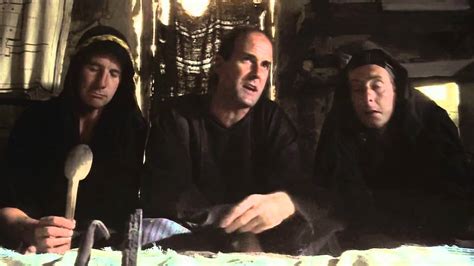
We’ve all seen the scene in Monty Python’s Life of Brian, when John Cleese asks, ‘What have the Romans ever done for us?’ Well, they were the first to, after conquest, subsume the defeated culture into their own culture and to claim the achievements of said culture as their own. So, the question should be: What have the Greeks ever done for us? A hell of a lot!
Incidentally, the Greeks were the opposite of the Romans when it came to conquest. The Greeks had no need of other cultures, their own culture was too strong to be influenced by another culture. Alexander the Great, the Macedonian Greek colonist, proves this point! When the Greeks settled somewhere, they built shrines to their gods. In the same way, American troops in the First World War arrived in Europe with all of their home comforts, baseball, cigarettes, chewing gum and, of course, jazz music. That was last century, the American century, and, like all dynasties, it too will end.
This is the ‘strength’ (the power to resist other influences) Nietzsche always lauds in his many paeans to the Greeks, something he also appreciated in the French Enlightenment – Voltaire not Rousseau! The French, according to Nietzsche, were perfectly content in their own plumage, they weren’t even interested in learning other languages. Sounds priggish, and, of course, done without style, it is chauvinistic. It’s a difficult balancing act: a dance, as Nietzsche would say.
I cry everyday when I encounter greatness, the ever so deep emotions of loss, of people old and new and still gone, and of time spent then and now. But really I cry over the artistry of this meaningless life, it’s beauty of formless smells, sounds and memory and how it gives an indescribable feeling of a place and time of younger days. No more.
I cry everyday because now I’m sober, I can’t block out realness any more of the exquisite, pitched feelings of pity, misanthropically expressed this tsunami of nervous energy within me. This, I wouldn’t have any other way, being close to me, being something other than me, knowing there is value but not in what. Not in life, I say, not in the other, but in me….perchance.
I cry everyday because I am life, my tears are real just like my body is real, it’s me. The primacy of inner thinking is each of ours, legitimate only if you can act it out. Character is great, full of tragic possibilities, the chance to be history maybe, yet the chance to be you is even greater. Something worth crying for, something worth fighting for…something at least.
I cry everyday because of the impossibility of wholeness, the impossible straight path is not before us. No Faustian pact for me, I haven’t the honesty for the devil, you see. No prescription for the line of beauty, no scythe-like eye watching from the control room, no bony hand poking our pity. Nothing is finished and never can be, it is ecstatic transcendence, our fate for all thee.
It is a fact that In fact I believe That is factually correct That is factually incorrect In fact it’s this In actual fact Factually this is the situation That is factually wrong The facts are The fact of the matter is In fact The fact is I The facts are as follows FACT The fact is I said In fact I said These are the facts This is a fact I am in a position to provide facts I am in no position to provide facts What fact Am I in fact I missed that fact Is it a fact And that’s a fact This is not a fact
The original post of this prose poem formatted the paragraphs wrong messing up the flow of the prose. I’ve made a PDF version which presents the poem as intended enabling the correct cadence of reading, and, hopefully increases your enjoyment!
It takes time to distance far and low never in a recordable instance vast vast depths and unknown faces laughing at all the deaths like balloons full of air bang bang bang blows over there
space is deeper than we know it may be our instruments that only grow spinning wildly after incoming each one warps and shadows always becoming frozen in a jewel cannot move in time with the dancing duel
the horizon has breadth that we see as being between birth and death a hope for posterity tangible and fattened full of rotting verity being honest is unbecoming of a idea that doesn’t exist no matter all our fucking running
The mountains, the seas the sun and the moon, nothing changes so it seems, except everything changes now and forever, even the air that I breathe.
From this vantage many view points, I can live this day, day by day until my mountains are struck, torn down and ravaged my emotions run out and out further until I am new again.
The Lion has done his work, destruction and endings and entrails lie everywhere, all roots trace back into nothingness of meaning and source, of endless life’s lived in disinterest and dead senses, doomed to repeat.
Still emergence and appearance even silence is all, the widest and broadest view no contrast is too thick or too thin, and then out of the silence comes a song, a playful melody from long before sung by a dancing child, unencumbered and free.
The child plays and creates, building castles made of sand, dancing and falling the child builds anew until memory comes full circle and I know I’ve been here before, dancing in the eternal return of the same.
…our standing has an enviable reputation for disinterest and impartiality in our reporting…
Whoever believes in that anymore, that one can be‘disinterested’ when engaging in something, anything? Its almost as though we are talking about a cognisant corpse whose ‘blood runs cold’ while making judgements. The inner core temperature of humans is 98.F, not exactly cold. Yes its a metaphor but it also hides the unconscious thought that, being civilised we are all rational calculating machines in every situation. This is something we have learned over millennia of cultivation, self-cultivation. The true animal inside us now only exists in an archaic hall of mirrors cropping up in our dreams, or sometimes ‘real’ life. In our early evolutionary existence we had very different emotions than we have today, though they’re part of us, a phylogenetic inheritance that we can only deny and censor.
Isn’t it more like this:
Does nature not remain silent about almost everything, even about our bodies, banishing and enclosing us within a proud, illusory consciousness, far away from the twists and turns of the bowels, the rapid flow of the blood stream and the complicated tremblings of the nerve-fibres? Nature has thrown away the key, and woe betide fateful curiosity should it ever succeed in peering through a crack in the chamber of consciousness, out and down into the depths, and thus gain an intimation of the fact that humanity, in the indifference of its ignorance, rests on the pitiless, the greedy, the insatiable, the murderous.
Friedrich Nietzsche, ‘On Truth and Lying in a Non-Moral Sense’
These antique, archaic remnants are no less the foundation of all humanity, but are the foundations of all civilisations. The greedy acquisitions, the double-crossing, the murders and appropriations of land, resources, people, the air we breathe. Yes, even the air that we breathe, it is the one resource that we can’t quantify no matter our pride; or because of our pride, we can’t give any value to it because we just don’t see it as stuff. This self-interest is also at the heart of our morality, we are social creatures of reputation with nay a disinterested bone in our body.
Nietzsche: ‘I fear we shall never be rid of God as long as we believe in grammar.’ Extrapolate…
2 The language of love, of beauty, of perfection, the language of the one, of God. We tell ourselves little myths every time we speak.
3 No two things are the same, indeed there is no ‘thing’. No straight line, anywhere. Grammar mythologizes origins, it is guilty of our consciousness and the first tool of repression used against our genuine emotions.
4 The free spirit unlearns life as it has been told to him previously. It gets to the point when language is of no more use in describing what is real as it can only point to a mythical past. What then?
5 What then? Understand that you have an overriding will to power, not a will of the appetites, these must be overcome by the higher will, not cause and effect, but your own quantum of will, your own quantum of power. Enact.
6 Free will is a myth of grammar, as is determinism. Freedom is only relative to your power, your whole being is defined by your higher will to gather power. It is of secondary nature that you will to live.
7 From Plato onward we ‘have a woeful history: man looks for a principal, from a standpoint of which he will be able to condemn man – he invents a world in order to slander and throw mud at this world: …he snatches..at nothing and construes this nothing as “God”.. Nietzsche.
8 …’the history of philosophy (truth) is a secret raging against the prerequisites of life, against the feeling of the value of life, against the championship of life. The philosophers have never hesitated to affirm a world provided it contradicted this world and supplied them with a handle with which to calumniate this world. Up to the present it has been the great school of slander.’ Nietzsche.
9 So, to know thyself means to be able to unlearn your past life and, essentially, to understand that man, as you are, is to be surpassed by the higher man who beautifully combines his animal nature with his hard won intellect that enables him to create authentically in his own history.
10 We must extrapolate the latter point even more….
11 …Mankind has no action, no endeavour, big or small, that doesn’t come down to: good or bad. Any subject, any movement. Everything is a moral question, especially logic and reason.
12 Because morality underpins all our actions, history itself is a morality tale. The vast corpus of morality is the expression of nay saying. The higher man, the free spirit is an example of yea saying. Transcend good and evil.
13 The more you say ‘yes’ the freer you are. Bob Marley sang, “no chains around my feet but I’m not free”: this is applicable to all peoples everywhere. Your historical culture weighs you down.
14 It is the philosopher’s disposition that he has a categorical imperative and nothing more.
1 Philosopher, definition: Lover of wisdom = love = beauty = art = creativity = truth.
2 Humans keep repeating the wrong history. Our existence is of a life of error and, therein, lies the possibility of our creative goal, our step beyond nihilism.
3 The free spirit knows how to deal with the nihilist foundation of being: by having joy in the countless opportunities of becoming.
4 Practically, what does this mean? It means the free spirit conjures up the strength (physical strength in that what you do moves you) to be his own artist in life. Takes joy in his own creations, is his history.
5 Such a creative life cannot have ressentiment because a truthful existence is full of tragedy, fateful tragedy. One must laugh in the face of tragedy, take strength from tragedy in the joyful Dionysiac orgy of creating out of the chaos of nihilistic being.
6 Great individuals have been before maybe they will be again..dare I think other cultures too?







 Kevin Nebula