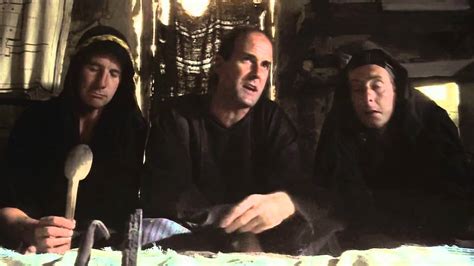
We’ve all seen the scene in Monty Python’s Life of Brian, when John Cleese asks, ‘What have the Romans ever done for us?’ Well, they were the first to, after conquest, subsume the defeated culture into their own culture and to claim the achievements of said culture as their own. So, the question should be: What have the Greeks ever done for us? A hell of a lot!
Incidentally, the Greeks were the opposite of the Romans when it came to conquest. The Greeks had no need of other cultures, their own culture was too strong to be influenced by another culture. Alexander the Great, the Macedonian Greek colonist, proves this point! When the Greeks settled somewhere, they built shrines to their gods. In the same way, American troops in the First World War arrived in Europe with all of their home comforts, baseball, cigarettes, chewing gum and, of course, jazz music. That was last century, the American century, and, like all dynasties, it too will end.
This is the ‘strength’ (the power to resist other influences) Nietzsche always lauds in his many paeans to the Greeks, something he also appreciated in the French Enlightenment – Voltaire not Rousseau! The French, according to Nietzsche, were perfectly content in their own plumage, they weren’t even interested in learning other languages. Sounds priggish, and, of course, done without style, it is chauvinistic. It’s a difficult balancing act: a dance, as Nietzsche would say.
PartThree:Towards a Morality in the Face of the Void.
150
Rarefied air contains no morality, which means it contains no hate and disgust. It’s important to be able to say Yes to, if not everything, then most things. Essentially: have no regrets!
151
Kant was a philosopher and a reading of his work details his intricacies, not least his Categorical Imperative, which relies upon an infinite progression of a category. Talk about a snake!
152
The humanist liberals (definitely French) write, “You cannot FORCE someone to RESPECT your feelings & sentiments. Specially by pointing a gun to his head, or a knife to his throat. This is basic stuff, morons.” As the history books prove, the sword is often accompanied by the pen.
153
Are you the lastman? Will the superman be in spite of you?
154
Humanism, liberalism, freedom, democracy, fascism, capitalism and Life. All are attempted, if not achieved, by the use of the gun.
155
Murder is an integral part of civilisation. The French do it, as do the English and Americans. So too does Islam, following in the long tradition of violence by Christianity. This we must accept.
156
E.g. The Enlightenment was a project of white supremacy, it was used to promote the attitude that only the white man will prevail, resulting in slavery and colonialism. This ‘measure of man’ is a weakling.
157
It is important to acknowledge the monstrous void that is always before us. Only then can an individual grow and be stronger. There is little to gain by keeping with myths, which civilisation is riddled with.
158
The earth spins at 67,000 miles an hour. Wow! How do we not feel this? Because the speed is constant, therefore humans have not felt any difference to form a judgment. This is similar to the moral system we live under: we don’t know any better because we for too long have lived under one spin, one morality.
159
How can we understand the background to the possibility of saying Yes to everything?
160
Virtue signalling and gaslighting are to be rejected in order to say Yes to everything. Both terms are riddled with ressentiment, therefore corrupt.
161
What is ‘natural’? Natural is something untouched by man. So now, man is not natural any more.
162
The spider tells us that all life is repeated. Do you have the strength to act, saying Yes?
163
Amor fati really means: have no regrets, act with no regrets….creatively.
164
So many activities (monsters) created to bridge the void, not least, ‘god’.
165
Idolatry shapes many a monster with many faces of the void, if you look carefully.
166
None of my idols are still standing, I’ve hammered them down. Now I’m sorting through the rubble.
167
The ego is probably the purest Úrsprung of life. Everyone has an ego, therefore monsters can exist. Nothing is perfect.
168
One day a noble voice said to me, “Kevin, you know you don’t have to follow me, you have to transcend me. Can you do it?” I replied, “I don’t know, maybe the spider will show me?” There was a laugh and then silence.
169
There is the possibility that I may never return from the path I’m on….
170
Keeping morality is possibly a bulwark against insanity, though also a bulwark against reality in all its ugliness and realness.
171
Humans have made a complete mess of civilisation with wilful restrictions (faith and law) on their potentialities. Now, everyone is guilty of something, it seems.
172
Nihilism is not a character trait, it’s the reality of our existence without values that you can be proud of. This is what is meant by having a vital life.
173
In my cave last night, I had 3 thoughts:
1. Talent isn’t born, everything is achieved through experience.
2. Art (capital A) is the encompassing element of our existence.
3. Science has made many mistakes because of scientist’s egos (leeches, bloodletting, thalidomide).
174
Creativity (Art) can go wrong, but it’s all we’ve got against the void. Mistake is almost man’s middle name – we have a whole history of the philosophy of errors.
175
At the moment, everything’s a type of casserole.
176
As I’m digesting, I’m thinking that allegory is the finest Art form.
177
Lounging in my cave as my easy meat meal settles, I think that creativity is the only valid response to the void, something fundamentalists, of many shades, cannot digest.
178
Facts are facts until another fact supersedes previous facts. Truth is truth based on the strong conviction of the truth-holder: therefore, everything consecrated is an act of power.
179
The religions of human existence include all elements of human activity, everything becomes an ideal, a god, whatever. It seems we need an ideal, an absolute, something ‘solid’ as a goal, or more a grounding. Otherwise, are we lost?
180
Everything is ‘out of interest’, why else?
181
Pretending has to be the ultimate predisposition.
182
Pretending is possibly the greatest achievement of the human race, it is creativity and, equally, deception. We have created our greatest inspiration and greatest means of oppression in one fell swoop.
183
Power needs to be fully examined, in all its expressions: materially, physically, psychologically. This is the next task.
184
We often see power as fait accompli.
185
As I said earlier, we are the great pretenders. Someone once wrote: “…you dice-players….. You have not learned to play and mock. Do we not always sit at a great mocking and gaming table?” Life is a dance….
186
You must laugh at yourself, laugh at your pretensions, only this way will you make the most of what power you can control. Such laughter will enable better pretensions in your future, if you have a future.
187
The great philosopher once: “So unlearn for me trumpeting of misery and all mob-mournful-ness!…how mournful do even the mob’s buffoons seem to me today! But this today belongs to the mob.” Is this still relevant?
188
Life is movement, a dance, an art, and it is controlled by the more powerful movers, dancers, artists, not, necessarily the best. So every individual must maximise their movements, at the very least. Become a better person in spite of your feet.
189
The life of humankind has been influenced by old sorcerers: the religious, and, today, the opposite of the religious. Really, they’re both contemporaries. One sword seems to be more powerful than the other, right now, though.
190
Morality and ‘virtue’ is founded on slavery. If we were to look at the foundations of moral Western history, at least, you will find that such things as agriculture and resources, always considered ‘good’, could not happen without the salves.
191
Power is not just a bad thing, it’s a good thing too, it corrupts entirely anything that could be good. Alternatively, corruption is good and anything that prevents it is bad. Such is the world we live in.
192
My peremptory (not plenary, just yet) thought is that power and morality are symbiotically connected.
193
We can have no doubt that morality, within itself, holds an imperative. As the existentialists said: we act as an advocate, implying a whole morality behind every act.
194
Power is not an isolated phenomenon (indeed, there are no isolated phenomena), it will attach itself to volume. So power relies upon a degree of weight.
195
Morality, too, is based on substance. The substance is the wrought out passions of humankind, made a substance by the approval or disapproval of clerics and law-makers.
196
What we have learnt so far is that nothing exists to us without value/substance/matter/volume, and points of view which are positions founded on perspective, a perspective influenced by value/substance/matter/volume.
197
What we can do is to look at the threads that morality has woven into what would, otherwise, be a vacuum in the power relationship.
198
There is no ideal goal, what we have is a vicious circle.
199
Power matters (no pun intended) because there is no goal, only a vacuum that is the real imperative, and we cannot but fill the hole. This is the vicious circle we are in and why power matters.
200
Because if there is no goal, visible and valid, then you follow power (mass culture) because there is nothing else to see. I’ve said before that the attempt to unmoor oneself from established power relations can lead to insanity. Then again, maybe that should be the goal?
201
The biggest and most motivating factor in human existence is the void. Without this grand absence we would have nothing to do, nothing to create and with an inability to put up goals.
202
Show me a human being without convictions and concerns, and I’ll direct you to Madame Tussauds.
203
Bias is a powerful tool in the power relations of morality. As all humans are ‘biased’ the term ‘bias’ is only effective by the power of the user of the term, ‘bias’.
204
It cannot be disputed that all of our existence is founded on a field. We are born into and via a field that already exists. Our growth (or lack of it) depends on this field and the power that seeds and controls the field. This determines prosperity/failure.
205
Freedom is the most glorious of myths. People seem to believe its a material thing, it’s not, it’s just one of our goals, the most unreachable goal.
206
The fact is, the soil we grow in is mixed with many nutrients of which blood and bone is the most common and potent element.
207
Cleanliness can be overrated, our real nature is mucky, it’s just we have some ideals which hold us back.
208
All recorded history of all recorded civilisations show that all that is considered ‘good’, like agriculture or mining for resources, have been done with the immense help of slavery. It’s as though we treat each other as commodities, a historical-nihilist phenomena.
209
What is considered good has it’s fruits enabled by power. No slavery without power, therefore, no actual fruits of the land without the power to impose upon the land, including those on the land.
210
Does power have to be so exploitative? Yes, it has no other means of existing, it is it’s very nature to seek out conquest, to seek out opposites to conquer, to fill up spaces.
211
The big lesson here is, there is nothing universally ‘good’. Goodness is not possible, it is an idol.
212
Historically ressentiment has prevailed because it made a virtue out of weakness and conceptualised what’s ‘good’ and what’s ‘evil’ in a new way…..in a Christ-like way.
213
Honesty, unlike truth, is far simpler and less convoluted.
214
There are different ways of doing the same thing. This is always a joy and a delight.
215
Draconian is derived from the ancient Greek law maker, Draco. Apt.
216
We laud so many things of the past, but we should be better than that.
217
The real definition of liberalism is two-fold: on the one hand it’s the ‘freedom’ to make as much money/resources as possible, on the other hand it’s to emancipate as many people as possible. You can’t have them both….
218
Liberty and freedom can only be felt, in a really true sense, by any ‘free’ slaves. Otherwise liberty is what is done to others, for liberty’s sake.
219
Most of us don’t do honesty, we prefer to talk about ‘facts’ and ‘truth’. This is not a criticism, it only reflects our nature.
220
Fruitful growth (I know from experience) can be enhanced with a little shock to the system during growth.
221
Fairness means equal distribution. Fairness doesn’t exist, there is no equal distribution in nature anywhere. Fairness is another of our idealisations, like the straight line and the circle.
222
Legitimacy is even more convoluted than truth.
223
Why does liberty have to be so violent, indeed, why do all convictions mirror themselves in this way? It is human nature to be violent, in thought and action. This is the real meaning of power: an ever growing excess of itself.
224
Power doesn’t care what it’s attached to, it just feeds.
225
Knowing the natural environment is the apex of creativity, we not only learn from the natural environment, we copy it. Engineering, in all of it’s aspects, mirrors and sometimes goes beyond the forces of the natural environment, physics describes those aspects. Creativity needs this knowledge.
226
To change means an absence of the absolute.
227
Freedom: freedom-for and freedom-from: therefore contingent, therefore not free.
228
Language: is vitally important otherwise we exist in a quagmire. Or: language is too abstract to give any real meaning beyond the most general of generalities.
229
Truth is malleable by its very nature as it changes as new facts and morals are discovered/invented. On the other hand, honesty never changes. People feel very uncomfortable when truth is questioned, it is an assault on their world-view, no matter how intelligent they may be.
230
Teaching is only good for children and slaves. It seems they’re both as malleable as each other. I make no moral judgement here.
231
As von Weizsacker said, ‘Nature is earlier than man, but man is earlier than natural science.’
232
Life is a square, a rectangle, it’s perpendicular, and a circle, too.
233
Never do what I say, and don’t follow me for long without making a clean break into something completely your own. I don’t even do what I say.
234
Living in the moment is insanity. Even though we’re able to feel the moment (and restrict the child’s natural impulse towards this feeling), we make culture in order to deal with our natural impulses.
235
In many ways, if not in all ways, insanity is the natural way. The law is the abnormal way.
236
The power of your will is all important. It is a muscle that you need to train. Sometimes ascetic, sometimes overflowing.
237
“..we have to remember that what we observe is not nature in-itself but nature exposed to our method of questioning.”
Werner Heisenberg.
238
Whether we create the moment or create after the moment ….we must create the moment!
239
When it comes to the ‘death of god’ we will all have to become serial killers in this matter. The god meme is like Hydra’s head and all cultures are far away from being in a pure atheistic state; indeed, atheists themselves are still morally religious.
240
There being no sure grounding, everything is mere interpretation, a spiral of interpretations. So culture is corrupt, corrupted by the misinterpretation of suffering into sin, thanks to society’s priests, who today have been replaced by other preacher’s of culture: politicians and opinion-mongers.
241
I doubt I’ll ever have a ‘final thought’ on anything.
242
But whatever there is, is vastly limited in origin, and as we keep growing (inventing) we need the nihilist hammer to stay on track, so as not to be so confused that our creations end up being just blobs and stains.
243
Even weak people should laugh at the weak. We should all laugh at ourselves, but none more so than the weak because laughter encourages strength.
244
Every plant you grow, you should treat as you would your child. See how important everything is?
245
If you want to be spiritual then study and observe physics, cosmology, astrophysics and mathematics.
246
Everything will change for as long as we exist: everything changes, even without truth.
247
Interpreting the materials of Earth is a creative act. Truth is a creative act which is why it changes over time when new knowledge (a creative act) emerges. Interpretation, interpretation, interpretation.…
248
To be ascetic is not a denial of life; to idealise asceticism is a denial of life.
249
Its important not to consume everything, rather its more productive to be circumspect and to choose with diligence. Once you’ve done that, consume away.
250
Rubble: things can be broken yet not destroyed….and yet, rubble creates something new from the broken as though the broken is destroyed: by being created again.….and again….and again….
251
If we were to be honest, our culture today is afflicted with consumption, gout and faulty genes.
252
Modern knowledge likes to believe that thinking begins with res cogitans and not res extensa.
Scientists want ‘absolute truth’, it is their goal in life, something that they will die for. All scientists (now and in the future) will die with this still a goal.
253
The physicochemical system always comes via, the psychochemical interpretation.
254
I cannot say this enough: creativity is our highest form of life, everything else is a waste. We only have three real arts: words, music and the line. All of these arts encompasses everything else.
255
It’s what you do not what you are, that’s what is important: after all, it’s the content of your character that holds ultimate value.
256
All of our three arts can be mingled together, which is an additional pleasure – or displeasure, depending on how much of a philistine you are.
257
I am the opposite of a philistine. My misanthropy has a lot of bases in the general philistinism of the general public. As I’m the opposite of philistine, why am I a misanthropist? That I am better alone is the cross I will always bear.
258
Comprehension is aided by an honest acknowledgment of temporality, or the chronology of our interpretations. We are always a project in process.
259
Space and time is pure facticity, there is nothing instant in a comprehension, or how we interpret. Even ‘instant’ is an interpretation. What is it: are facts a myth or is truth a myth? Or is facticity the most powerful element of ‘truth’? Are both facts and truth creations? Hermetics, hermetics, hermetics…
260
Maybe the ‘animalistic’ grunt has the most sustainable truth within it?
261
Does conscience come from luck, education, money, or power? Does conscience come from feeling? Is feeling the conduit of conscience? We are always in the act of answering such questions unbeknown to us.
262
Annoyance is the genocide of humanity.
263
This is a complex issue (or not), due to the history of one culture gaining resources via rape, pillage, thieving, slaves and murder, which gave them time and resource to do things we now consider ‘good’ and ‘valuable’, like science. What are now crimes helped thinking.
264
The most annoying thing about fate is that you can’t ignore it, your life is happened and is happening at the same time.
265
Plants inhale and exhale. We have a strange attitude towards life; as always, morality is the problem. Basically, we (life) cannot exist without cannibalising life (life).
266
Money relies upon workers, it’s a scale too, some workers are worth more than other workers, and some people don’t even have to work.
267
The ‘world’ is a moral situation.
268
Frankly, we don’t care (negative) about reality, we only care (positive) about what we want to be the truth.
269
If we can only feel without a before and after.
270
One can’t be honest in society, the last thing anyone can do is to pierce the bubble of our gilded perspective. Ostracism is the end result.
271
Monumental history is not only of no use, it is a chain around our feet. Enslavement is the entropy of those who enslave, anything that enslaves can never be free.
272
Klaus Kinski: ‘One should judge a man mainly by his depravities. Virtues can be faked. Depravities are real.’
273
Honesty, facts and truth: they sound like they should be blood brothers, yet they have different impregnated sources. Truth is a made up concept; concept really means: construct.
274
Real knowledge isn’t gained by an isolated interpretation of experience: taken in isolation, everything is nonsense. Science knows this, but the propagandists still believe in the disinterested self.
275
If you are to breed, know how to truly cultivate your seed, otherwise you’ll end up with deformed plants. By this I mean, never trust your children’s learning with any organised form of education.
276
It will be counter-intuitive, but maybe a society riddled with laws encourages criminality and a free use of abuse by those who feel part of the system?
277
Less laws + natural distribution = stronger society = less needs for laws = a better society.
278
The human dichotomy: natural/creative. Who can answer this?
279
No human being born today is without total surveillance. You would have to be a ‘savage’ literally living in the ‘wild’, and even then, you would all be ‘discovered’ and preyed upon.
280
The (obvious) issue of morality is that it leaves us all in an intractable situation, it is not possible to live up to the grandiose statements that morality forces upon you.
281
“We must make a new nature” is the calling card of all “sophisticated” societies. I think, as a whole, we don’t want to be our nature. On first sight our nature is horrendous, at least, our morality tells us so.
282
Machiavelli pronounced, not goodness, but the means to survive badness. Morality is always the issue, so Machiavelli wrote his stuff, it is what influenced him. And because Machiavelli, like all thinkers, were concerned with morality, he had to jump through many placed moral hoops to make his point.
283
Sometimes describing what you want to do ruins everything you end up doing.
284
If we can philosophise without morality, what a thing that would be. Possibly the closest appropriation of what we call ‘freedom’.
285
Sometimes what is hidden determines your success or not. What is hidden is your authentic self.
286
As long as we can all understand: knowledge, facts and truth are symbiotic, whilst honesty is the best amalgamation of this symbiotic relationship.
287
Nothing pure, nothing simple, nothing whole, nothing absolute, approximation is as pure as we can get.
288
If we are to live well, we ‘must possess and from time to time employ the strength to break up and dissolve a part of the past..’
289
Reason is a replacement for other reasons: breakthroughs in knowledge are esoteric in origin.
290
We all live (literally) in a fantasy world. All positions are created by an interpretation that has become the most powerful of interpretations, enforced by the power that can enforce ideas. Acknowledging this fact causes all sorts of problems, physically and psychologically.
291
Civilisation, we all agree, is our great endeavour. But, it must also be said, civilisation is our great misfortune. We dress up ridiculously in the attempt at civilisation and, thereby, introduce many sanctimonious unrealities.
292
So, humanity, as we know it, is made up with all sorts, some prescribed, others not. Some, which culture proscribed are prescribed, retrospectively.
293
Morality is claimed to be one of humanity’s great achievements. The only achievement morality has ever created is hypocrisy, it is a power tool used to make our world and we all run with it, generally due to misplaced egotism.
294
As existence we only comprehend power, be it, a motive, a hunger, a desire: many more drives than we could possibly be aware of, and yet they are full of affection with influence.
295
To escape morality is the first goal of the free spirit. The second goal is to create a new goal, based upon the knowledge of your own authentic and repetitive life that experience has taught you.
296
Morality: no wonder children get fucked up. And then follows our justice system, which creates the impression of rectifying ‘problems’ that their own system has enabled.
297
I am everything the opposite that I am.
298
One of the problems of honesty is that the more you know about people and other entities the more you can, either, dislike or like their honesty. Then again, is that a problem?
299
Even if a society consisted of only two people, there would still be a pecking order.
300
Being herd animals we can’t help but be social, this is the matter that any free spirit must navigate, not as a shepherd of the herd, rather as an outlier from the herd, that is fully comprehensive of the grounds that the free spirit escapes from.
301
We need to eat and drink. So we need the herd, but only a part of the herd, something that requires negotiation.
302
When we talk about facts (phenomena we come across) we have no other option but to consider them as they are, which is what we call facts. When we talk about truth we ignore interpretation (problematic phenomena) and say what we really want.
303
Trying to control all of our phenomena creates so many problems, let it go, just let it go. Maybe ‘freedom’ is a letting go.
304
Interpreting the world as it is, is not the same as interpreting the Earth or planets or suns, in fact the Universe is itself an interpretation founded upon our bare existence which needed an interpreted ‘world’ so that we can interpret this everything else.
The law is a bigger religion than….well, religion…
308
All depravities have a moral foundation.
309
The only point of existence is excellence, as a goal, as something achievable, as a motivating force..
310
Never be cynical with children.
311
The stomach is more influential than the brain: digesting is elemental to thinking.
312
We have to unlearn much of our past life, this is the first step to be taken on the pathway to the free spirit: ‘Be yourself. All that you are now doing, thinking, desiring, is not you yourself.’
313
‘..the history of philosophy (the history of truth) is a secret raging against the prerequisites of life, against the feeling of the value of life, against the championship of life…philosophers have never hesitated to affirm a world provided it contradicted this world’ – Nietzsche.
314
We were never what we think of ourselves historically and we can never be what we think we will be in the future. Understand this and it’s possible that we really can be in the now, more consciously in the knowledge of now, saying Yes to this new knowledge of the now.
315
Finally….
316
For a brief moment time stops now, it is the instant (not even that) when you realise that from now on you live your life as the only life and as something that will return again and again. You accept your past life (what else can you do with it?) and jump into your now life with all the force and vigour you can give it, being authentic to your self only. Thus, a new day dawns…
 Kevin Nebula